
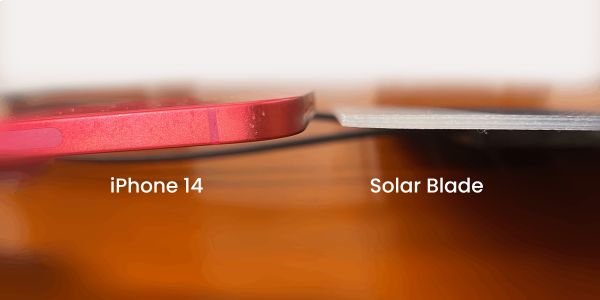
TSO Green’s Shade Management System is an advanced, lightweight, and highly efficient solution designed to optimize solar energy production and shade tolerance in greenhouse environments. With a thickness of just 2.5–3 mm and weighing under 3 lbs/sqft dead load, the system is designed to fit seamlessly into various greenhouse types, offering maximum deployment flexibility.
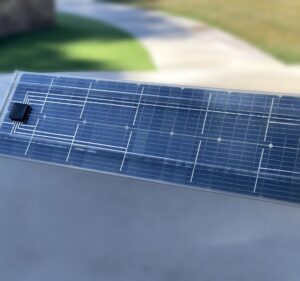
The Shade Management System features 16 bypass diodes strategically placed using proprietary technology— a design that minimizes labor costs for manufacturing, something previously unattainable due to labor-intensive processes. This design allows the solar blades to be deployed even in high-density variable shading conditions. The system’s design is specifically optimized for maximum shade tolerance and maximized solar cell coverage, ensuring efficiency across diverse environments.
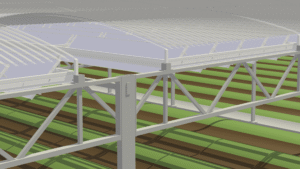
The system is bifacial and boasts high-efficiency solar cells with up to 32% efficiency, minimizing area waste and maximizing surface area for energy production. The anodized aluminum 6061 alloy frame is lightweight, durable, and designed for longevity, allowing in maximum sunlight while providing strong structural support. Its rigid frame is engineered to maintain a ¼” deflection across 2.5-meter spans, offering stability even in challenging conditions. Additionally, the frame’s thin profile is optimized for both strength and efficiency, supporting potential spans up to 12 meters in greenhouse installations.
The mounting system is designed for compatibility with Single-Axis Tracking, and the water-resistant drive system enables precise 0 to 360-degree rotation of the solar blades. This precise articulation, adjusted to specific angles relative to the sun, optimizes lighting conditions within the greenhouse, enhancing the growth environment for plants while ensuring bifacial energy production from the system.

RESA Power conducted an independent electrical load study for TSO Green to assess the power output and efficiency of bifacial photovoltaic panels installed in a commercial greenhouse. The study aimed to evaluate how panel angles influence energy production while balancing the greenhouse’s crop shading needs.
Two sets of TSO’s bifacial panels were tested, with their angles adjusted from 0° to 345° to determine efficiency variations. Power output depended on both panel angle and sunlight exposure, with the highest efficiencies (16% to 32%) observed when the panels were angled to follow the sun’s movement. Notably, higher efficiencies were recorded at certain negative angles relative to the ground.
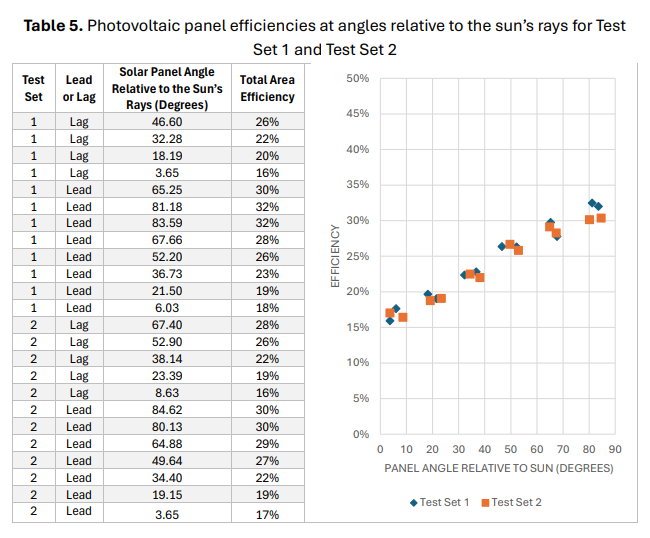
The panels were mounted at trellis height, and external data sources—including Caltech’s JPL Horizons System and Meteomatics AG’s Weather API—were used to calculate solar azimuth, elevation, and irradiance.
Peak power output reached 342W, with overall output ranging from 139W to 342W, depending on the angle. Compared to standard monofacial solar panels (250W–400W with 15%–22% efficiency) and high-end bifacial panels (25%–30% efficiency), the tested panels performed within or above the expected range. Their bifacial design, which utilizes reflected light, further enhances power production compared to traditional monofacial panels.
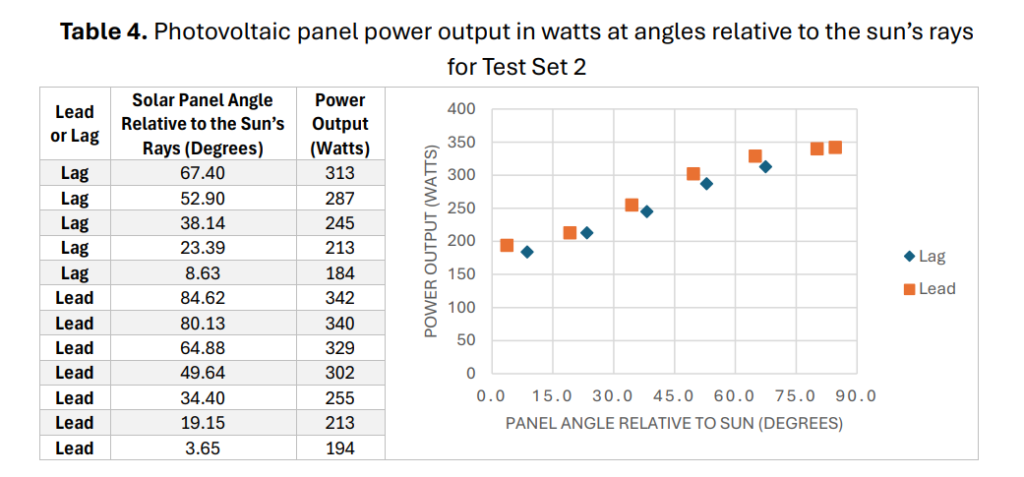
Unlike fixed-tilt solar panels, which cannot dynamically adjust their angles, these bifacial panels can optimize their positioning for maximum efficiency while also supporting crop shading. This tracking capability makes them particularly well-suited for agricultural applications, where balancing energy generation and plant growth is critical.