Advancing Farm Resilience Through Integrated Solar Innovation and Plant Science
Powering Agriculture with Solar and Plant Science
At TSO Green, we are leading the charge to revolutionize American agriculture by blending cutting-edge solar agritech with plant science to create a resilient and sustainable future for our farms. Our commitment to empowering American farms and securing America’s future drives us to continuously innovate, combining solar energy expertise with advanced plant science to optimize crop growth and energy efficiency.
Our technology does not just boost productivity; it ensures that American agriculture remains resilient and sustainable for generations to come. By focusing on key metrics like Daily Light Integral (DLI) and Photosynthetically Active Radiation (PAR), we empower farmers to create the ideal environment for plant development, increase yields, and contribute to America’s food security and economic resilience.
Plant Science
Daily Light Integral (DLI) is a critical metric for plant development, measuring the total amount of photosynthetically active radiation (PAR) a plant receives over a 24-hour period. PAR refers to the specific wavelengths of visible light that plants use for photosynthesis—the process by which they convert sunlight, carbon dioxide, and water into energy. The right balance of PAR is essential for optimal plant growth and productivity.
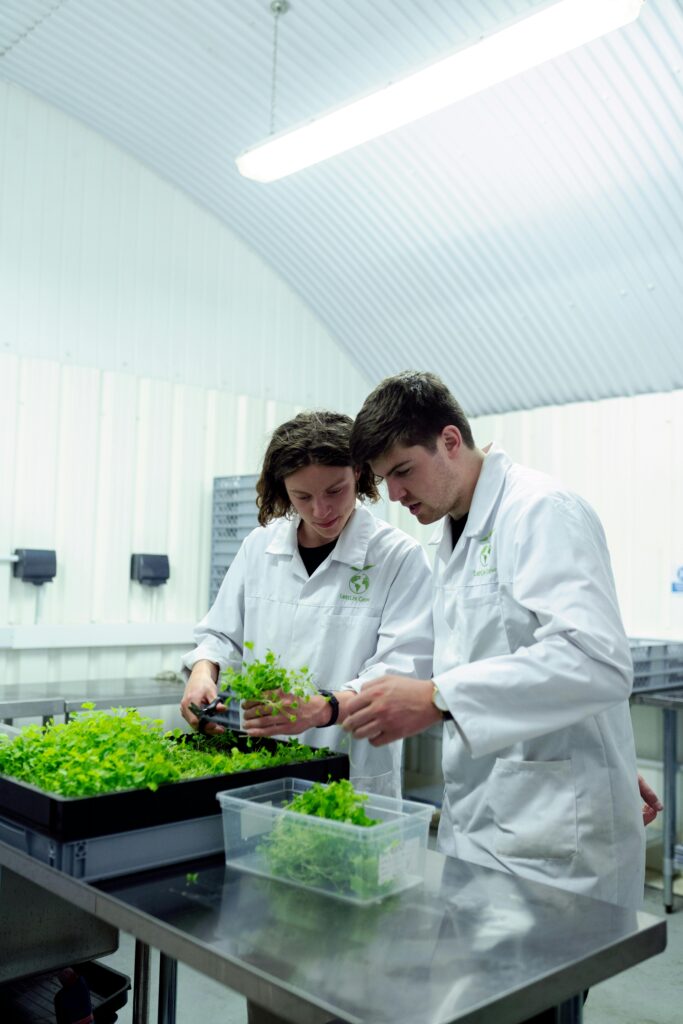
At TSO Green, we empower farmers with cutting-edge solar agritech solutions to achieve the ideal DLI and PAR. Our innovative automated crop sunlight management system precisely controls shading and sunlight exposure, optimizing greenhouse and field conditions for maximum yield.
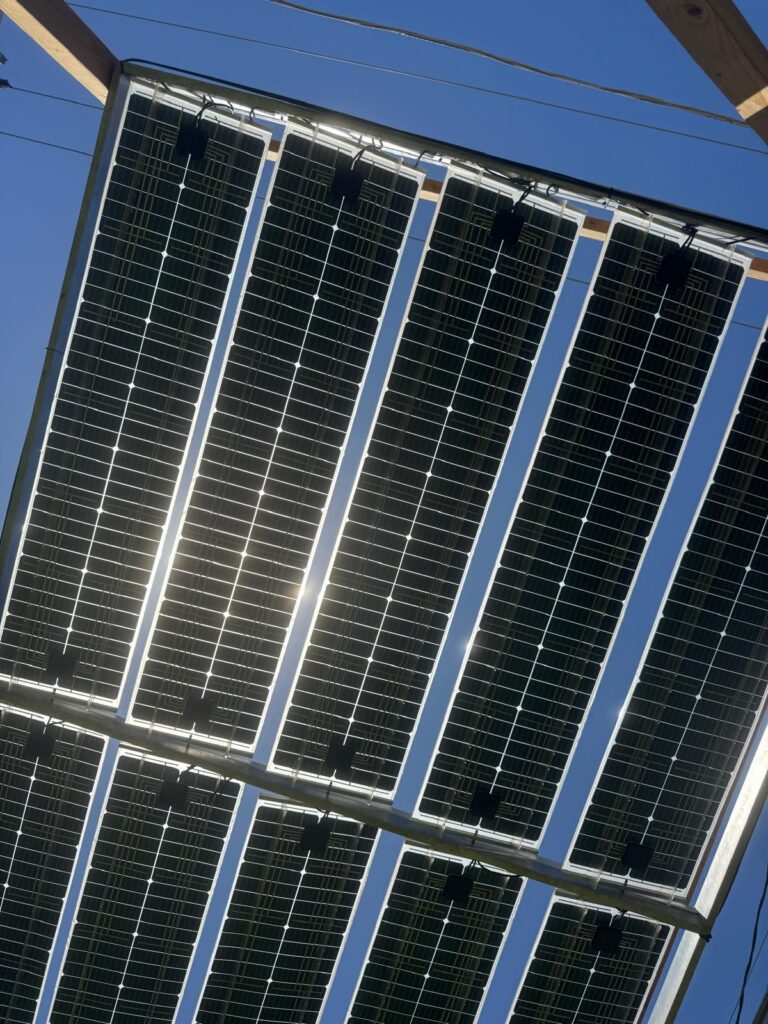
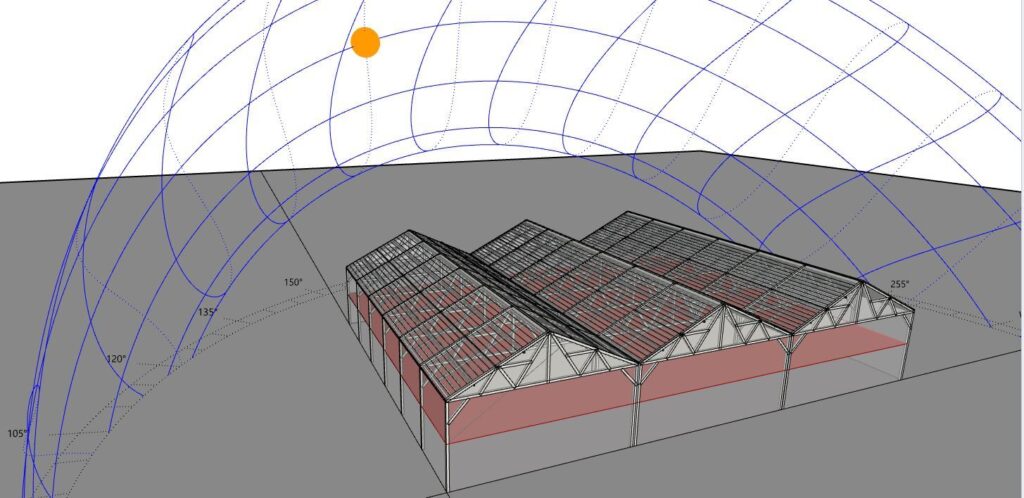
Featuring 360-degree rotational TSO Solar Blades, our system dynamically adjusts to the sun’s position, ensuring plants receive optimal light throughout the day. By fine-tuning light exposure, TSO technology enhances photosynthesis efficiency, leading to higher crop yields and greater agricultural sustainability.
With TSO systems, farmers can maximize productivity, reduce energy costs, and cultivate healthier, more resilient crops—backed by science-driven innovation.
Photovoltaic Science: Maximizing Solar Energy for Stronger, More Efficient Farms
When it comes to solar photovoltaics, the angle of incidence refers to the angle between incoming sunlight and a line perpendicular to the surface of the solar panel. A larger angle of incidence results in less sunlight being absorbed, leading to reduced energy production. Solar panels are most efficient when light strikes them at specific angles, with the optimal angle typically being around 90 degrees, where the sunlight hits the panel directly.
Albedo also plays a key role in solar energy production, as it dictates how much sunlight is reflected off the surface beneath the panels. This is especially significant for bifacial panels, which capture light from both sides of the panel.
At TSO Green, we leverage cutting-edge technology to maximize energy generation by optimizing the angle of incidence. Our water-resistant drive system enables precise 0 to 360-degree rotation of the TSO Solar Blades, ensuring optimal positioning throughout the day. By adjusting the blades to precise angles relative to the sun, we create ideal lighting conditions within greenhouse grow areas and outdoor fields, regardless of the season. TSO’s system’s consideration of albedo and bifaciality ensures that no sunlight is wasted, boosting efficiency by up to 32%.
Our solar-powered farming solutions not only reduce the environmental impact of agriculture but also strengthen America’s energy independence and the resilience of its farming sector.